
Article courtesy of Dallas Business Journal.
The Dallas–Fort Worth region is no stranger to growth. In recent years, however, that growth has accelerated into something closer to transformation.
Consider Princeton, a once-rural community northeast of Dallas. At the start of the decade, fewer than 18,000 people lived there. By mid-2024, that number had surged past 37,000, making it the fastest growing city in the country. Across the broader Dallas–Fort Worth region, five of the 15 fastest-growing U.S. cities are located within the metro area. Meanwhile, Fort Worth surpassed 1 million residents in 2024, joining Dallas as the only metro area in the nation with two cities above the million-resident mark.
As development pushes outward, particularly north of I-30 and into formerly rural areas, the use of special districts in residential communities has expanded. According to Steve Robinson, Partner at Allen Boone Humphries Robinson (ABHR), the reasons are largely economic.
The Economics of Attainability
“Since the beginning of the pandemic, infrastructure costs are up as much as 100 percent,” Robinson said. “Land prices have increased dramatically, and interest rates have gone up. All of that impacts housing attainability.”
Special districts allow developers to finance public infrastructure, including water, sewer, drainage, and roads, separately from the upfront cost of a residential lot. Without a district, those infrastructure costs must be embedded directly into the lot price at the time of sale to a homebuilder.
“In North Dallas today, development costs can approach $2,000 per front foot,” Robinson explained. “That’s potentially $100,000 in development cost on a single lot. If you have to embed that into the lot price, you immediately push the home out of reach for many buyers.”
By financing infrastructure through a district, those costs can be reimbursed over time rather than paid in full at the initial point of sale. The result is housing that is more attainable in a state already facing affordability challenges. Texas ranks near the bottom nationally in homeownership rates, and the average first-time homebuyer is now over 40 years old. For existing city residents, the district requires the infrastructure supporting new growth be paid for by the new residents, not subsidized by the existing taxpayers.
“In a housing crisis, this is one of the few tools that allows us to remove public infrastructure costs from the upfront price of a home,” he said.
Development Beyond City Limits
A second factor driving the rise of special districts in North Texas is geography. Much of the region’s growth is occurring outside municipal boundaries or within cities’ extraterritorial jurisdictions, known as ETJs. These areas surround a city and allow the city to retain certain regulatory authority.
Historically, cities could effectively determine whether a developer could use a special district in their ETJ. Recent legislative changes have altered that dynamic. Developers now have the ability, under certain circumstances, to opt out of the city ETJ if agreements cannot be reached, creating more flexibility to structure financially viable projects.
At the same time, municipal and county budgets are under pressure from property tax reforms that have compressed tax rates and limited revenue growth. That has constrained cities’ ability to independently finance new infrastructure to serve expanding communities.
“Cities and counties are challenged right now in their ability to expand infrastructure,” Robinson said. “Districts provide a way to finance that infrastructure through a dedicated property tax, rather than relying on already tight public budgets.”
The Rise of the Master-Planned Community
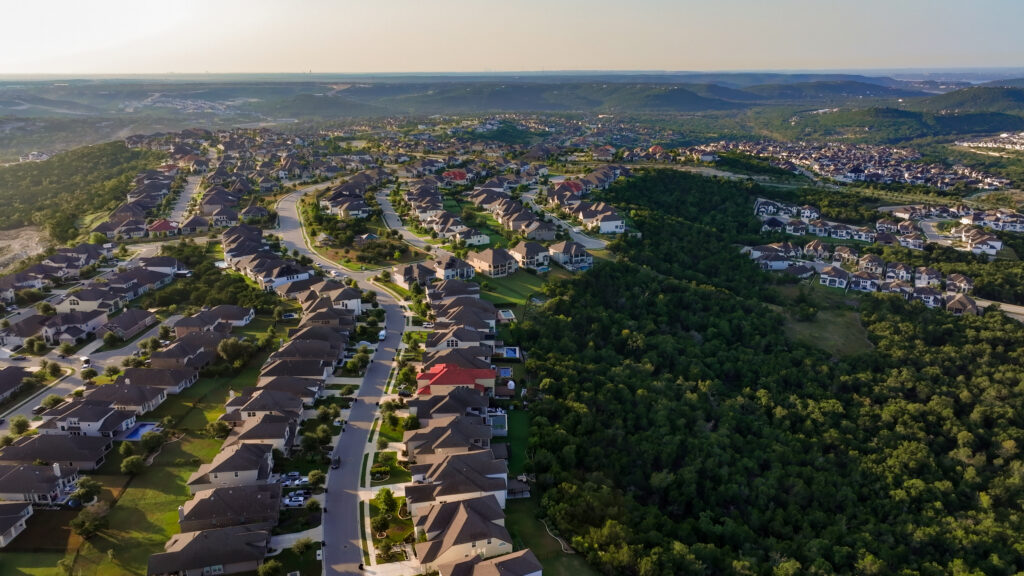
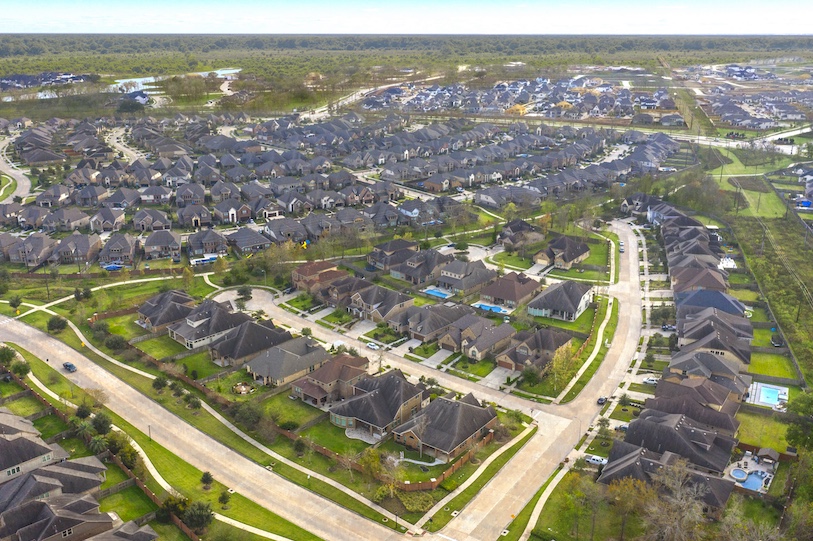
The growth of special districts also aligns with the expansion of large-scale master-planned communities, which increasingly shape the North Texas housing market.
Nationally, these communities continue to outperform the broader for-sale housing market, and Texas routinely leads the rankings. Of the 50 top-selling master-planned communities in the country, 17 are in Texas, and virtually all rely on special districts as part of their financing structure.
“Today, you’re simply noncompetitive without a district,” Robinson said. “Every large-scale master-planned community developer will tell you they cannot make the math work without one.”
The scale of projects has grown dramatically over the past two decades. Twenty years ago, a 200- to 300-acre development was considered large in North Texas. Today, projects can span thousands of acres and house tens of thousands of residents.
Robinson points to Grand Prairie as an example, where the 5,000-acre Goodland development is underway. At full buildout, the project could accommodate 40,000 to 50,000 residents and include mixed-use retail, office space, parks, data centers, and extensive community amenities. This project, cooperatively developed by Provident Realty and the City of Grand Prairie, will bring billions of new property tax base to the city.
“These are 40- or 50-year developments,” he said. “You need a stable financing structure that allows you to plan for the long term. The district provides that certainty.”
Importantly, not all reimbursement flows directly into lower lot prices. In many cases, it also supports enhanced amenities—trails, parks, open space, and community programming—that buyers increasingly expect. By separating infrastructure financing from lot pricing, developers can allocate capital more strategically across the project.
A Public-Private Partnership
Robinson describes special districts as the most basic form of local government. They are limited-purpose entities authorized to finance and provide essential public infrastructure. They are governed by elected boards and subject to open meetings laws and other transparency requirements.
He emphasizes that they operate as part of a broader public-private partnership. Developers phase projects carefully, building infrastructure and homes incrementally based on market demand and absorption studies.
“They’re constantly monitoring the market,” Robinson said. “You don’t build 3,000 acres at once. You build 100 acres, see how it absorbs, and move forward from there.”
In a region experiencing sustained in-migration, tight housing supply, and affordability pressures, Robinson believes special districts have become indispensable.
“The big picture is economics and regulatory change,” he said. “Without districts, or some other form of public reimbursement, large-scale residential development in North Texas simply isn’t financially viable. And without that development, the affordability challenge only gets worse.”