

What is a Municipal Utility District (MUD)?
The authoritative guide to MUDs.
How they are created, how they work, and why they matter for Texas.
OVERVIEW
This resource is for anyone who wants to better understand how MUDs work. Whether you serve in the Texas Legislature, work in real estate development or public finance, serve on a MUD board, or are considering purchasing a home in a MUD, this guide provides a clear, practical overview.
Municipal Utility Districts are special-purpose government entities created under Texas law to finance and deliver the water, sewer, drainage, road, and park infrastructure that makes community development possible. They are created by the Texas Legislature or through the Texas Commission on Environmental Quality (TCEQ), regulated by multiple oversight bodies, and governed by locally elected boards of directors.
MUDs operate under Texas Water Code Chapter 54 and 49[1] and derive their authority from Article XVI, Section 59 and Article III, Section 52 of the Texas Constitution. More than 4 million Texans live in MUDs. Across the state, the communities where people choose to live, from master-planned neighborhoods in the Houston area to rapidly growing developments in North Texas and the Hill Country, were built using this financing structure.
Source: 1 Capitol.Texas.gov
MUDS by the Numbers
3.9M
Houstonians living
in MUDs
1800
Water districts
in Texas today
32M
Texas population
and growing
$50B+
Infrastructure financed
by MUDS
- For Legislators and Policy Makers
- For Developers and Industry Leaders
- For Business and Economic Development Leaders
- For Residents and Homebuyers
Veramendi
For Legislators and Policymakers
How MUDs Help Texas Keep Up With Its Own Growth
Texas is the fastest-growing state in the country. According to the U.S. Census Bureau, Texas added nearly 400,000 new residents in 2025 alone, bringing the state's total population to 31.7 million. That growth is not slowing. According to projections from Woods and Poole Economics, Texas is expected to grow from approximately 31.5 million residents today to nearly 41 million by 2050 and nearly 46 million by 2060, adding more than 14 million people over the next three decades.
Population projections point to continued, substantial in-migration driven by jobs, business climate, and quality of life, factors that are well underway and will continue regardless of any policy decision about MUDs.
Municipal Utility Districts and similar special districts are the mechanism that answers both. By issuing tax-exempt bonds to finance water, sewer, drainage, road, and park improvements, MUDs allow new development to pay for its own infrastructure over time. Bond proceeds reimburse developers for eligible infrastructure costs. Residents in the new community repay those bonds through district property taxes. Existing city residents do not pay. Existing county taxpayers do not pay. The cost lands entirely on the people who benefit from it, and that accountability follows the property.
When a home is sold, the new resident agrees to take on the tax obligation (as outlined in a pre-purchase notice, acknowledged by the homeowner in writing), meaning each homeowner pays only for the infrastructure they're actively using. On average, homeowners in starter-home communities turn over every five to seven years, so the cost continues to track with use over time.
The question is not whether growth is coming. The question is where those people will live, and who pays for the infrastructure to support them.
Goodland
Goodland shows how this works on the ground. The 5,000-acre development sits in North Texas, on land within the City of Grand Prairie's extraterritorial jurisdiction, outside city limits and without city utilities or services in place. Planned for 10,000 homes and roughly 50,000 residents, along with industrial facilities and a retail town center, Goodland needed water, sewer, drainage, and roads before any development could be built. However, Grand Prairie was not positioned to finance regional infrastructure on that scale for land outside its limits. MUD financing made the development possible and put the cost on the people who will live and work instead of on existing Grand Prairie residents.
This model is the only mechanism in Texas that incentivizes private capital to build publicly owned infrastructure. The developer finances and constructs it. The MUD reimburses the developer once construction is verified. The infrastructure transfers to the community and is maintained at public standards from day one. No other financing structure in Texas replicates that public-private partnership.
“MUDs have been crucial in allowing an adequate housing supply and keeping home prices lower than in other high-growth states."
— Jim Gaines, former Chief Economist, Real Estate Center at Texas A&M University, via the Association of Water Board Directors.
Texas is also the nation's largest homebuilder by volume, accounting for 14.6 percent of all building permits issued nationwide, well above its 9.3 percent population share.[1] The median home price in Texas as of May 2026 is $332,000, compared to $413,300 nationally.[2] That affordability gap is not accidental. It is structural, and the MUD financing model is a significant part of why it exists.
Sources: 1 Realtor.com, 2 TRERC TAMU
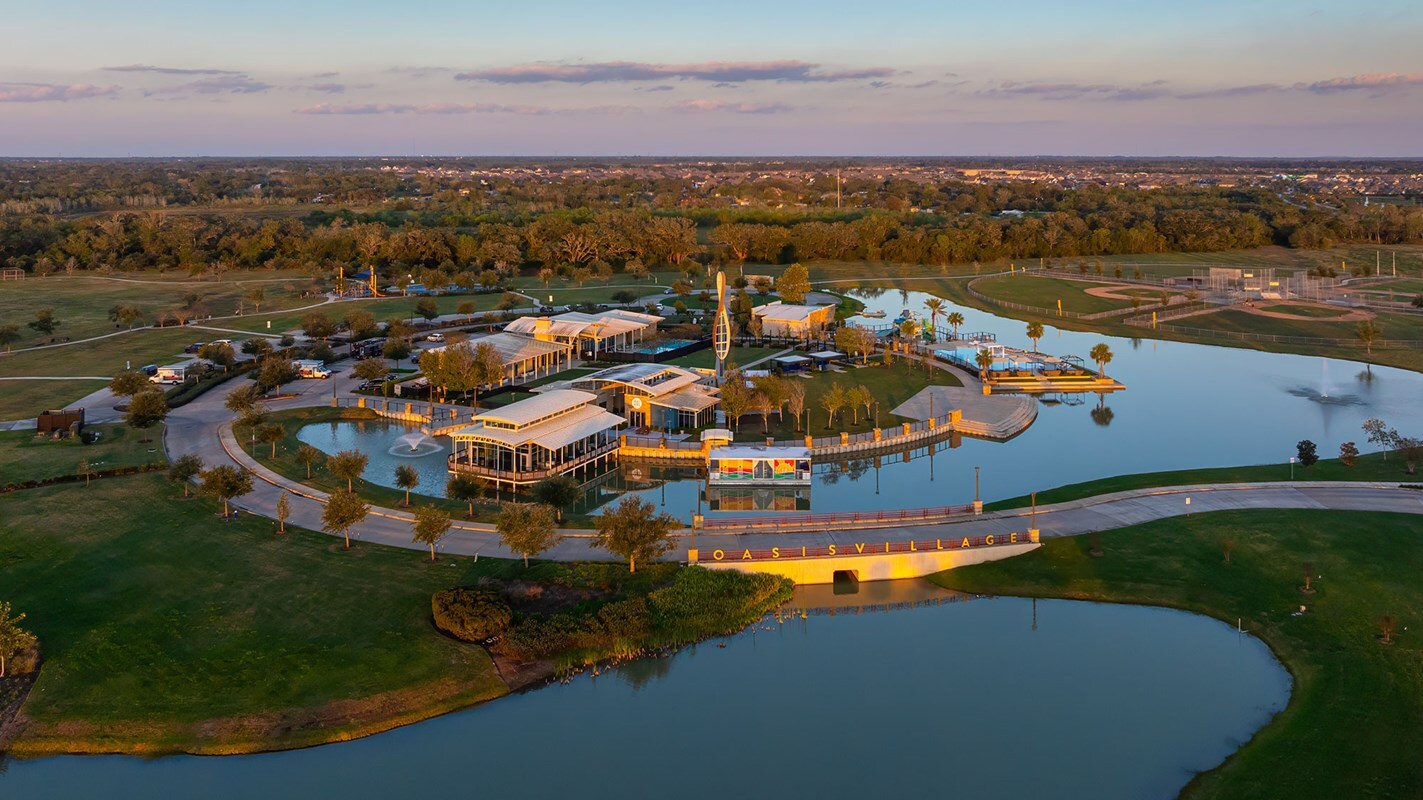
Meridiana
The Policy Case in Plain Terms
Who pays for the roads, water lines, and drainage systems that new communities require? Without MUDs, those costs get embedded in home prices, making housing less accessible and affordable, or they fall on existing taxpayers. MUDs eliminate that tradeoff. Growth pays for itself, and existing city and county residents are not asked to subsidize it.
The oversight framework is also legislatively durable. Bond issuances require certification from TCEQ and independent approval from the Texas Attorney General. Tax rates and bond authorizations require voter approval, with maximum rates capped by state statute. The accountability structure is written into state law at every level. In fact, MUDs are one of the most basic forms of local government in Texas, managed by a board of directors elected directly by the residents who live there.
On Private Property Rights
Texas has always held that government should not impede the rights of landowners. From the state's earliest legal framework to its modern legislative priorities, protecting the ability of private property owners to use and develop their land has been a foundational principle of Texas governance.
A landowner who chooses to sell or develop their property, consistent with state law, should be able to do so. MUDs are one of the primary vehicles that make large-scale private development feasible in Texas. Restricting or burdening the MUD model makes it harder for private landowners to develop their land, less affordable for the people who buy homes there, and more expensive for existing taxpayers who get asked to fill the gap. Preserving the MUD model is preserving one of the few mechanisms that lets private capital build public infrastructure without burdening taxpayers or restricting landowner choice.
RELATED RESOURCES
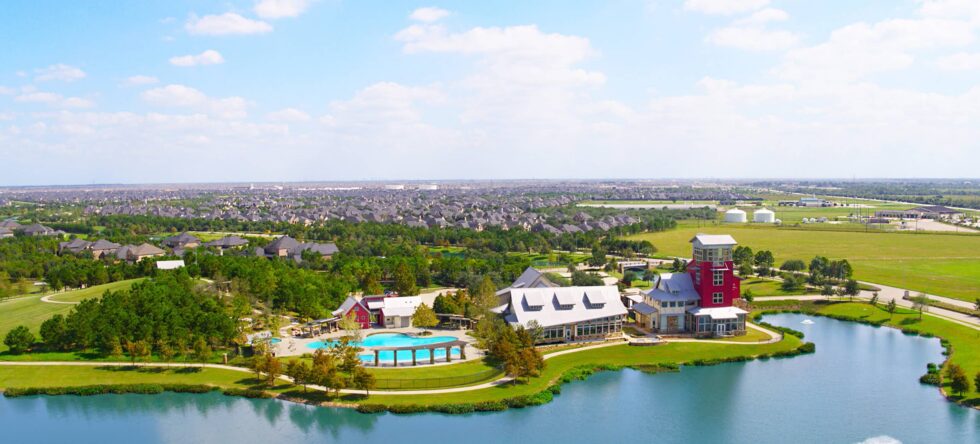
MUD Financing Flowchart
How private capital is deployed, audited, and reimbursed through the MUD bond process, from construction through TCEQ certification and Attorney General approval.
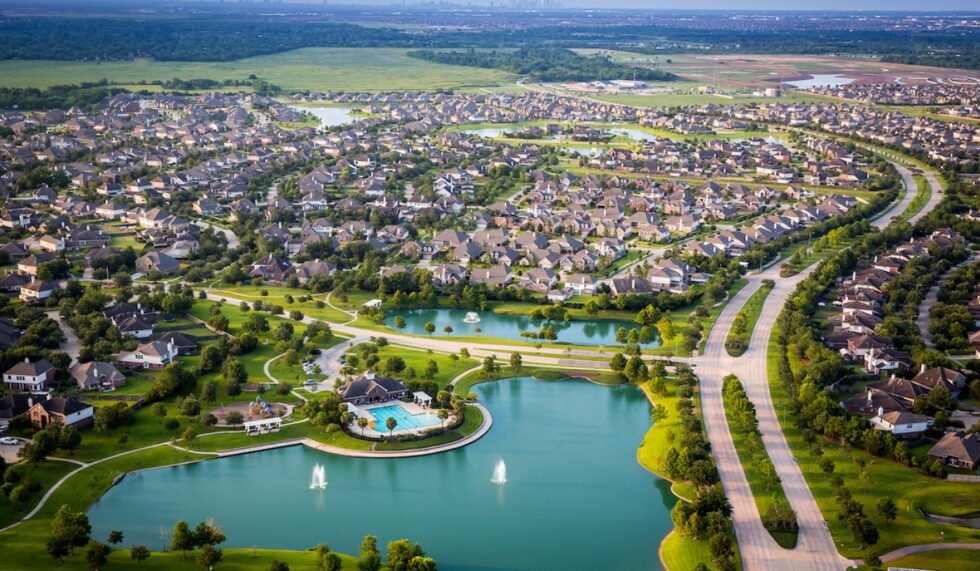
Growth to Pay for Itself
How MUDs maintain the Texas Miracle by ensuring new development funds its own infrastructure, keeping the cost of growth off existing taxpayers.

MUD vs. Non-MUD
A side-by-side look at how MUD financing affects home prices, monthly payments, and income qualification requirements.
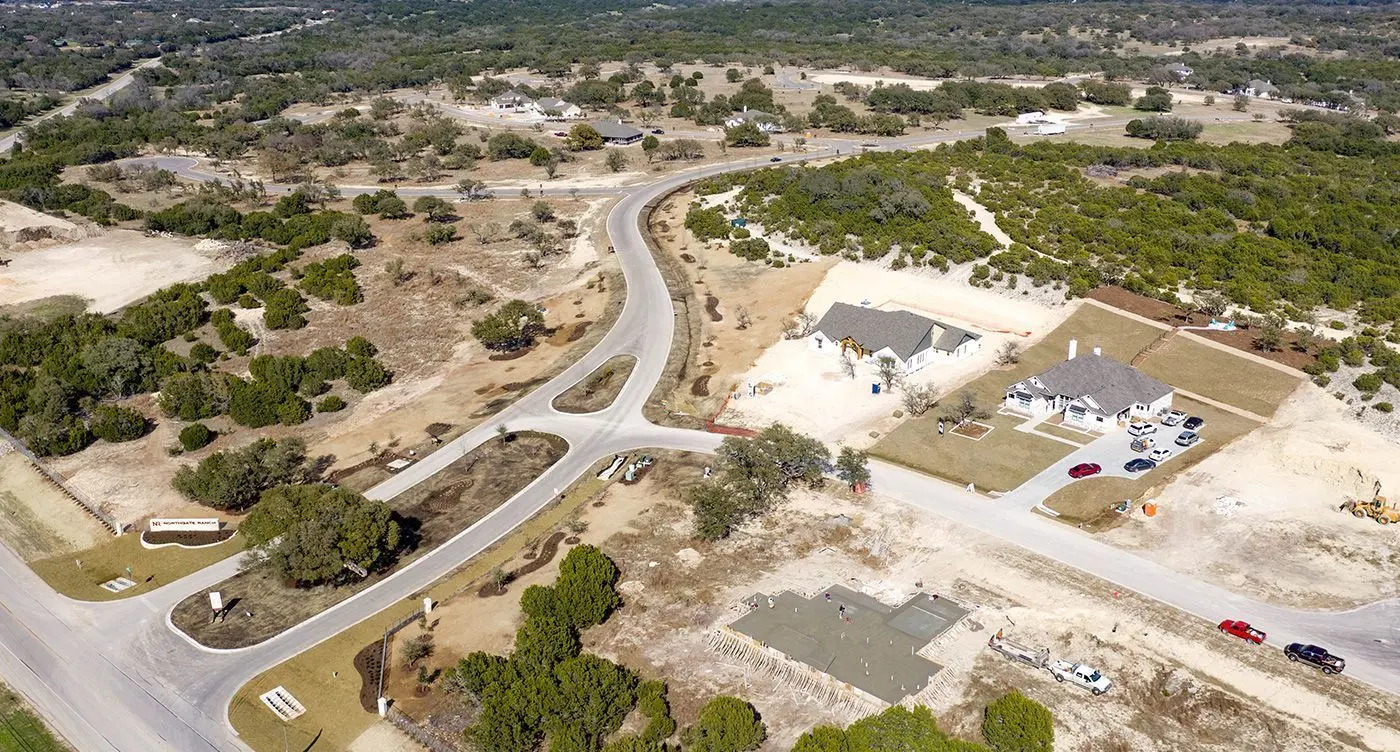
Northgate Ranch
For Developers and Industry Leaders
How MUD Financing Works
Municipal Utility Districts give developers a proven mechanism to finance public infrastructure without embedding those costs directly into home prices. Developers fund and construct infrastructure in phases. Once TCEQ feasibility standards are met, including at least 25 percent of projected improvement value being in place, the MUD issues tax-exempt bonds, certified by TCEQ and independently approved by the Texas Attorney General, to fund water, sewer, drainage, road, and in some counties, park improvements, and reimburses the developer under a pre-negotiated reimbursement agreement.
As homes are built and the tax base grows, bond proceeds are repaid by district residents over time. Because MUD bonds often carry tax-exempt status, they carry substantially lower interest rates than private financing alternatives. Lower financing costs keep new housing more attainable for buyers while allowing developers to deliver complete, amenity-rich communities.

Loraloma
The Dual-Approval Requirement
Every bond series must pass two independent reviews: TCEQ certification that construction and feasibility standards are met, followed by approval from the Texas Attorney General confirming compliance with state law. Total bond authority is capped by what voters approved at election. Additional authority requires a new voter-approved bond election. There are no shortcuts.
Bonds cannot be issued until there is sufficient taxable value on the ground, ensuring there are enough taxpayers with property values high enough to repay what is borrowed.
What This Means for Community Design
Because infrastructure costs are recovered through bonds rather than built into home prices upfront, developers have the flexibility to invest in parks, green space, trails, and amenities that make Texas' communities among the most sought-after in the country. New home sales in master-planned communities continue to outperform the broader market.
According to RCLCO, while overall new home sales were down just over six percent at mid-year 2025, top master-planned communities finished the year just three percent below their 2024 pace, driven by lifestyle appeal, strong amenities, and a broader mix of attainably priced housing. The data points to continued MPC outperformance in 2026. Communities built using this model, like Valley Ranch and Cross Creek Ranch, set the benchmark for what suburban development looks like when the financing structure supports long-term investment.
RELATED RESOURCES
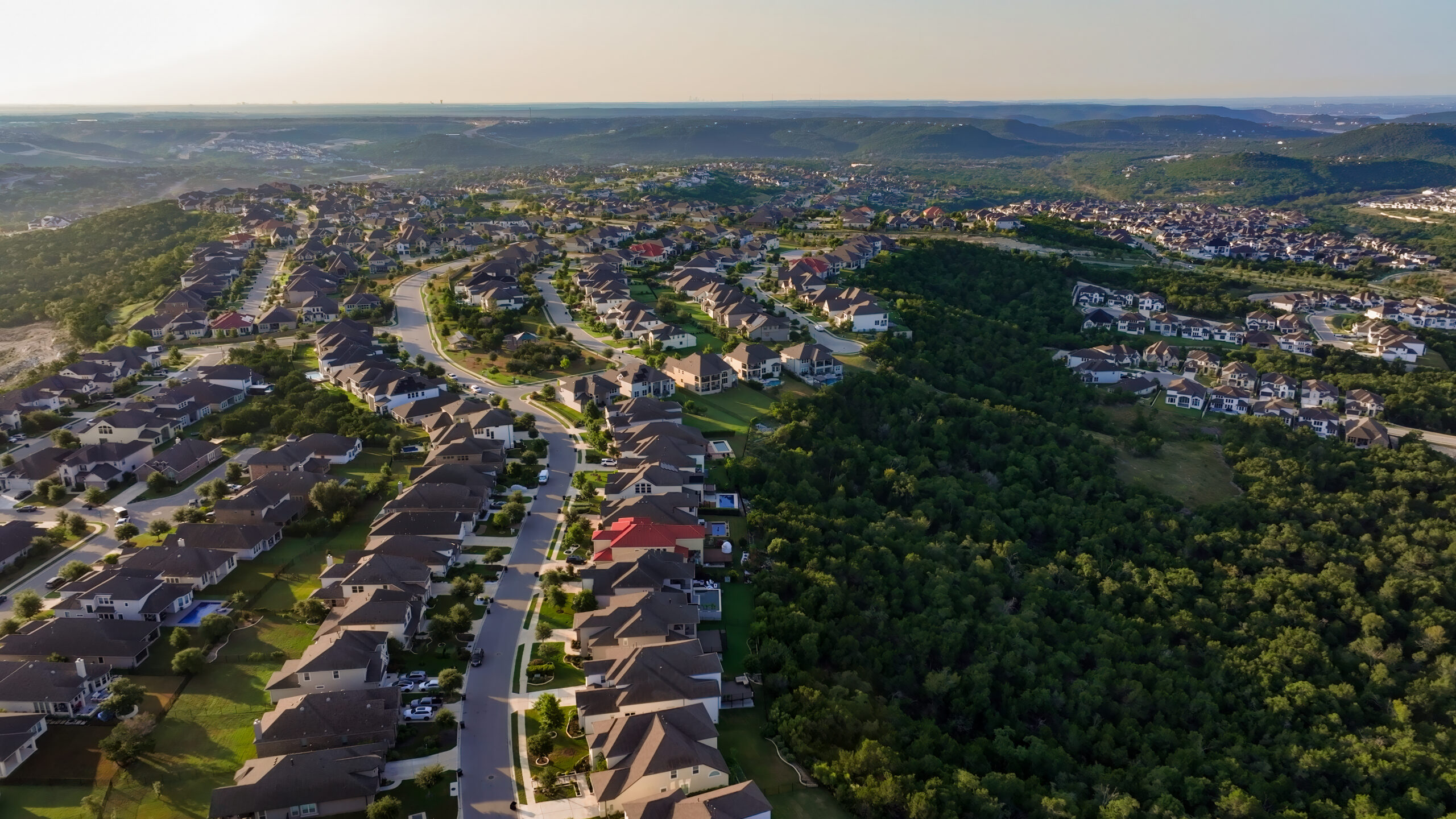
Top-Selling Master Planned Communities
RCLCO's annual ranking of the nation's top-selling master-planned communities, where Texas communities consistently lead the nation.
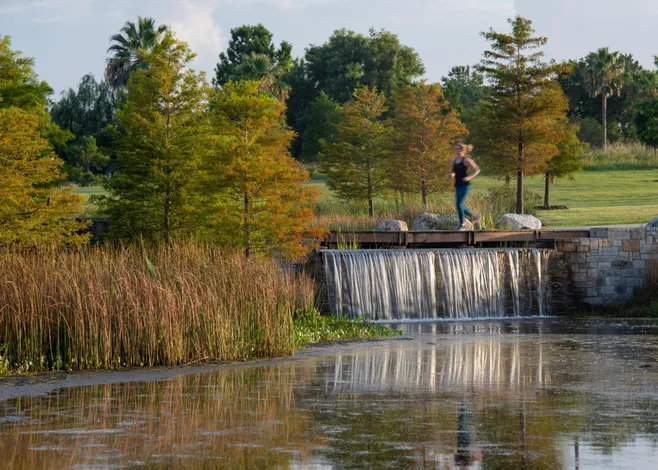
MUD Park Bonds
How MUDs in eligible counties finance parks and recreational amenities, and the legislation that expanded that capacity.
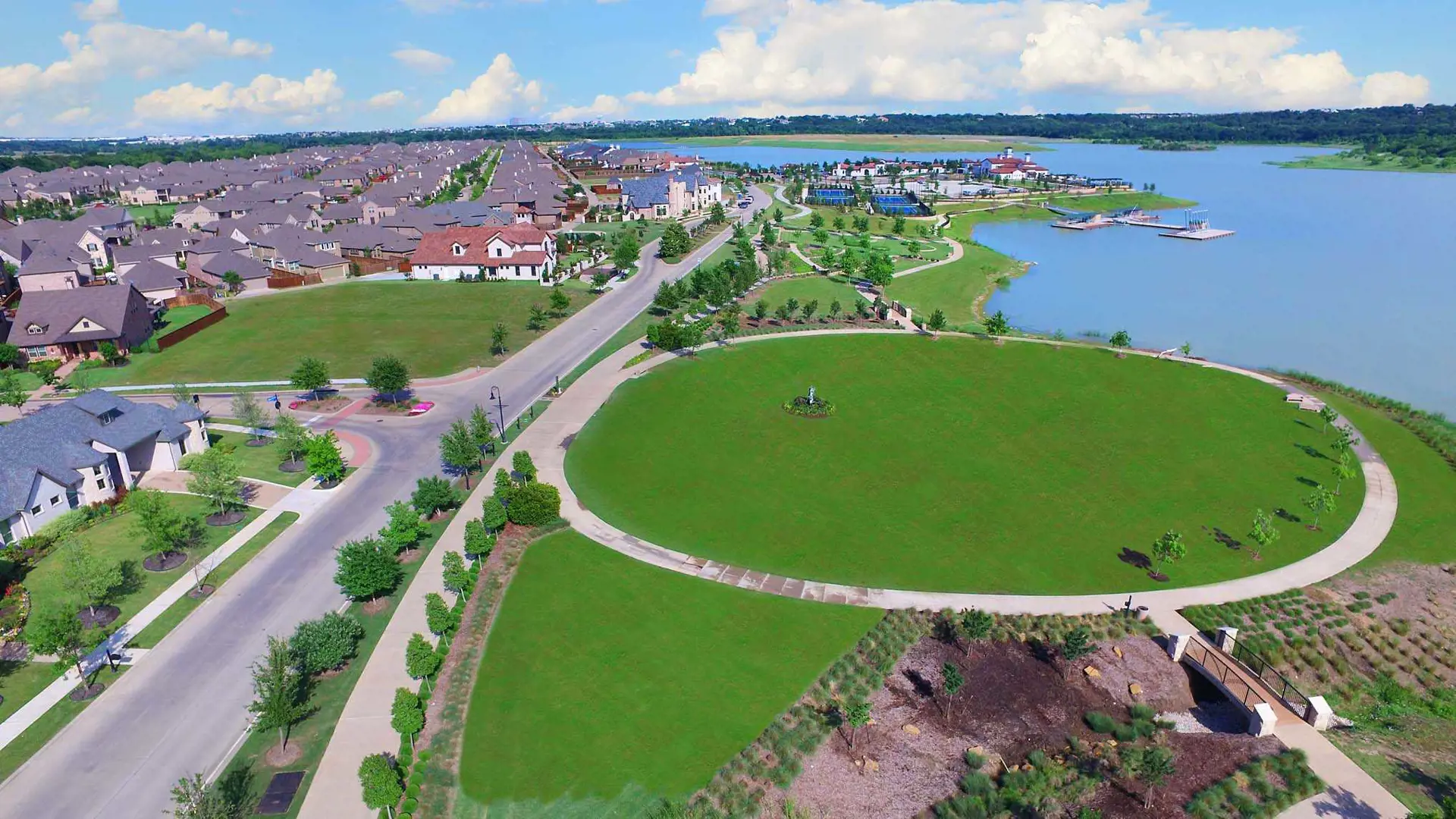
Why MUDs Are Essential for Texas Housing Development
Industry leaders and ABHR partner David Oliver on how MUDs make large-scale development financially feasible across Texas.
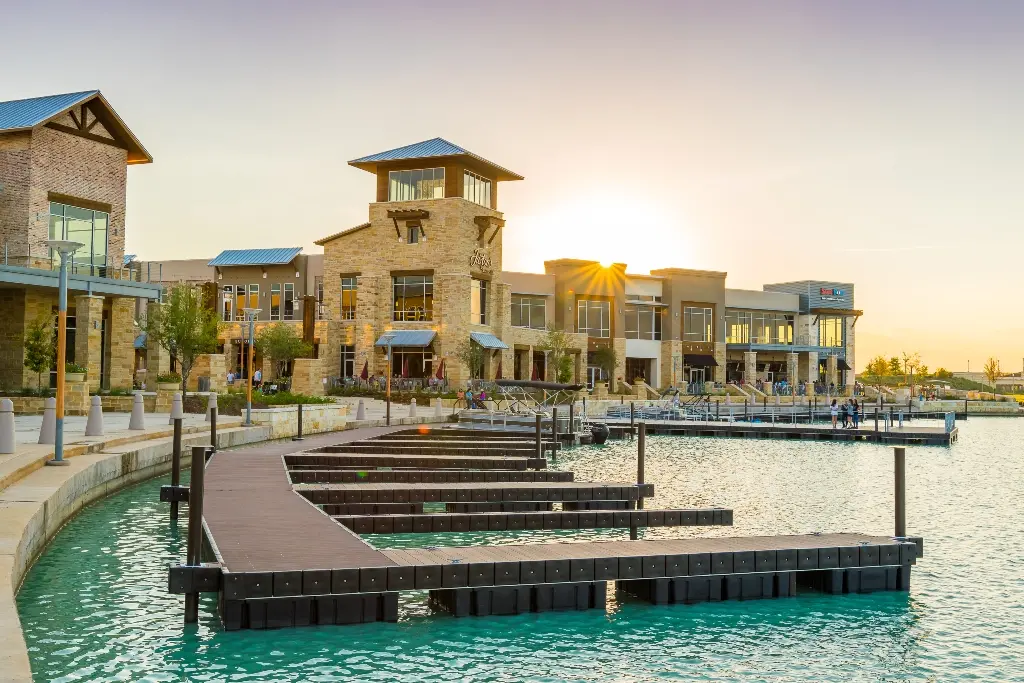
Towne Lake
For Business and Economic Development Leaders
The Connection Between MUDs and Texas’ Competitive Advantage
The quality of a community is a talent and business location factor. Companies make site selection decisions based in part on where their employees want to live, and in Texas, the communities where people consistently choose to live are, in large part, built on MUD financing.
Affordable housing reduces labor costs, contributes to quality of life, and helps attract skilled workers[1] all factors businesses weigh when deciding where to locate or expand. Regions with strong housing outcomes are increasingly recognized as better positioned for long-term economic growth.[2] When companies evaluate sites for new facilities or relocations, housing plays a central role in workforce attraction, retention, and community sustainability.[3] Access to affordable housing, healthcare, education, recreation, and cultural amenities helps regions attract and retain top talent and executives.
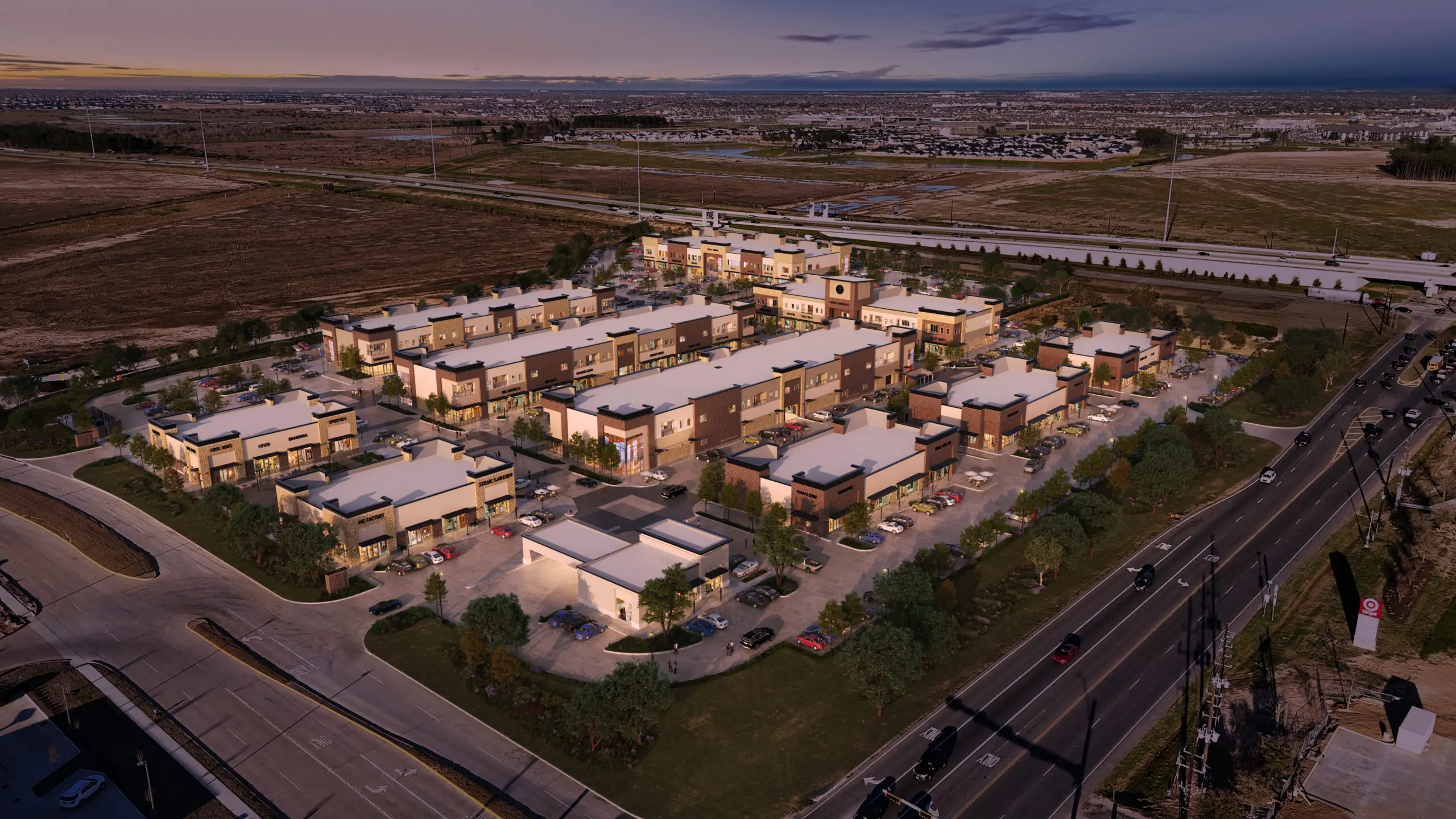
Elyson Town Center
Master-planned communities across Texas offer parks, trails, green space, and full amenity packages that set the national standard, at price points that remain accessible because infrastructure costs are financed through MUD bonds rather than priced into homes at purchase.
As a result, cost of living in Texas communities continues to be lower than in similarly sized cities and metropolitan areas across the country. In many master-planned communities, homebuyers can choose from a wide range of housing options, including homes for first-time buyers and workforce housing.
The Texas Association of Business has recognized that bonds are often the best and only mechanism available to pay for the capital improvements that make communities competitive.
For economic development leaders, MUDs are a structural part of the reason Texas can attract and keep businesses and workers that other states cannot.
RELATED RESOURCES
MUD Park Bonds
How MUDs in eligible counties finance parks and recreational amenities, and the legislation that expanded that capacity.
MUDs Keep Texas Affordable
MUDs and other water districts maintain the Texas Miracle and support the more than 1,500 people who move to Texas per day.
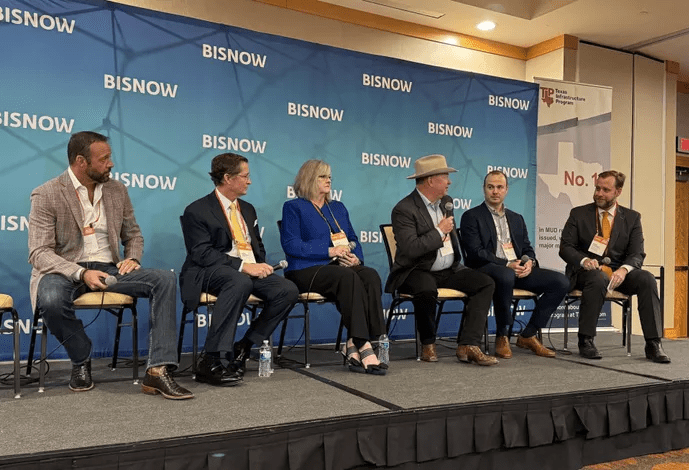
Houston MPC Panel
Developers at 2026 Houston Bisnow MPC panel say Houston still the land of opportunity for residential development.

Austin Point
For Residents and Homebuyers
Living in a MUD
More than 4 million Texans live in Municipal Utility Districts. For most, the day-to-day experience consists of quality infrastructure, maintained parks, ever-expanding amenities, and a neighborhood built to last.
The MUD tax line on your annual property tax bill covers two things: debt service on the bonds that financed your community's infrastructure, and ongoing operations and maintenance of water, sewer, and drainage systems. As bonds are paid down over time and the district's tax base grows, the per-household tax burden typically decreases.
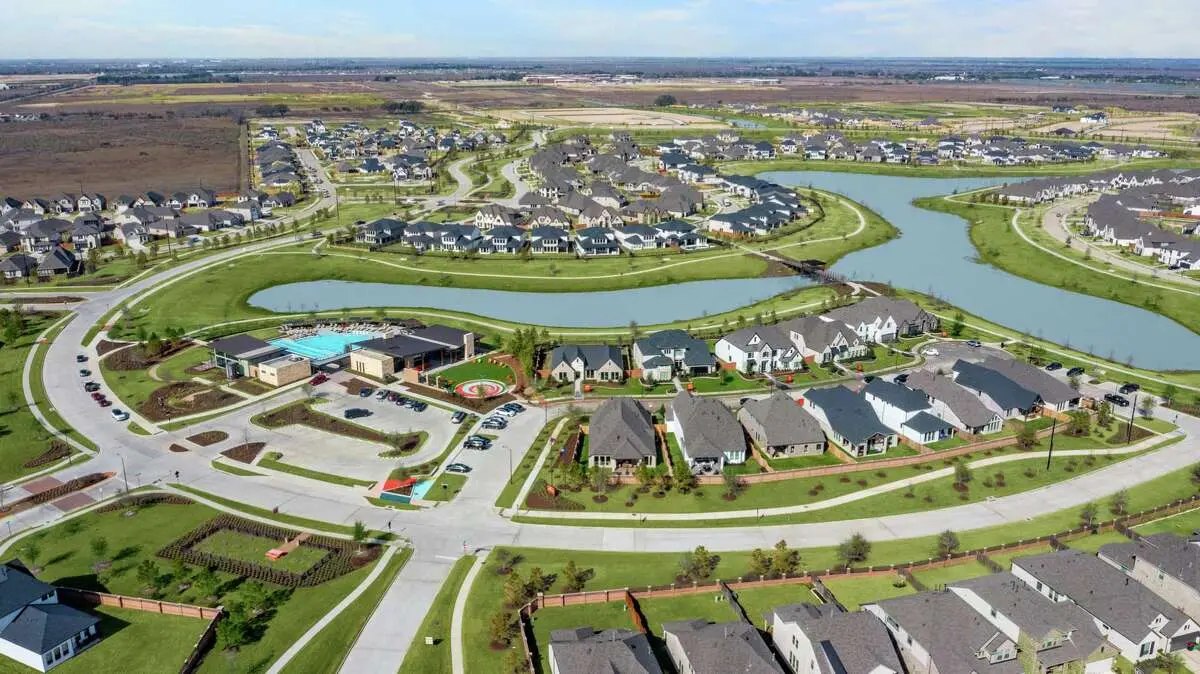
Elyson
The Bond Framework Behind Your MUD
Every bond series must pass two independent reviews: TCEQ certification that construction and feasibility standards are met, followed by approval from the Texas Attorney General confirming compliance with state law. Total bond authority is capped by what voters approved at election. Additional authority requires a new voter-approved bond election. There are no shortcuts.
Bonds cannot be issued until there is sufficient taxable value on the ground, ensuring there are enough taxpayers with property values high enough to repay what is borrowed. As a result, infrastructure financing grows alongside development and remains subject to statutory tax rate limitations, generally between $1.00 and $1.50 per $100 of assessed value.
Who Governs Your District
MUD residents are governed by a locally elected board made up of their neighbors. Tax rates and bond issuances require voter approval. Board members are subject to state ethics laws, conflict-of-interest requirements, and nepotism prohibitions. In a MUD, you are one of a few thousand residents, not one of millions waiting on a city council to act.
What MUD Financing Means for Home Prices
The difference between buying a home in a MUD and buying a comparable home without MUD financing is significant. When infrastructure costs are embedded in the home price rather than financed through bonds, lot prices rise substantially, and that increase flows through to every part of the transaction. Based on Houston area new home market data modeled by Community Builders Advisory Services (CBAS), the comparison looks like the following:
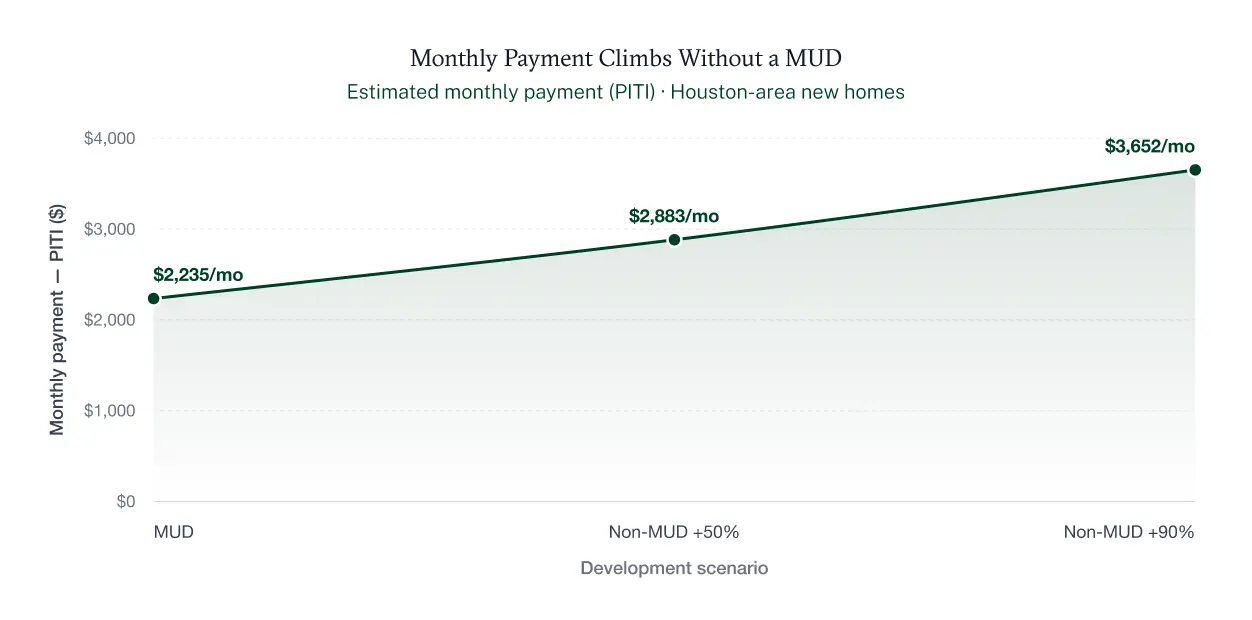
In a MUD, the average modeled home price is $250,000 with a total monthly payment of $2,235 and an income requirement of approximately $95,800 to qualify. In a non-MUD scenario where infrastructure costs are embedded at 90 percent of lot value, the modeled home price rises to $475,000, with a total monthly payment of $3,652 and an income requirement of approximately $156,500 to qualify.
That is a difference of $225,000 in home price and more than $1,400 per month in carrying costs, based on the same lot, the same interest rate, and the same loan structure. The only variable is how infrastructure is financed.
RELATED RESOURCES
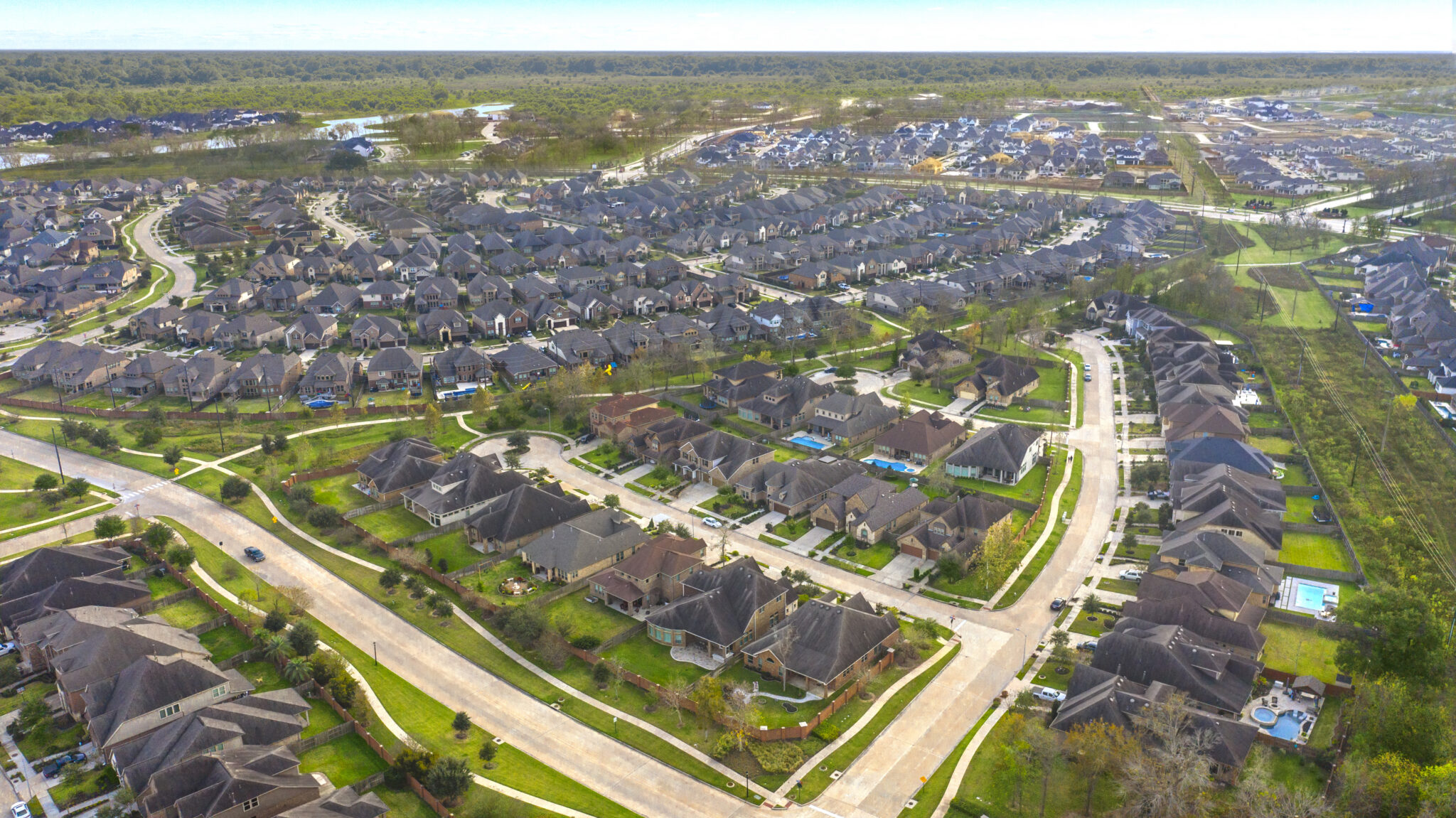
Texas Master Planned Communities Dominate
How Texas Master Planned Communities Rank Nationally in RCLCO's top selling master planned community report for 2025 sales.
Houston Homebuyers Turn to Master Planned Communities
How demand for amenity-rich, thoughtfully designed neighborhoods is driving continued growth of master-planned communities across the Houston area.

The Growth Of Lifestyle Communities
How developers are rethinking community design to meet homebuyer's expectations for experience-driven communities and more social connection.
ACCOUNTABILITY BUILT IN
The Oversight Framework at Every Level
MUDs are among the most regulated forms of local government in Texas. The oversight structure is embedded in state law and applies throughout the life of the district, from formation through buildout.

Dual-Agency Approval
Bond issuances require TCEQ certification confirming construction and feasibility standards, including an ample tax base. Independent approval from the Texas Attorney General follows before bonds are sold, applying to every bond series.

Voters Decide
Tax rates and bond authorizations require approval by registered voters living within the district, not developers or the board. Maximum tax rates are capped by state statute, giving residents direct control over financial obligations.

Conflict-Free Governance
Board members are subject to state ethics laws, conflict-of-interest requirements, and nepotism prohibitions. Texas law explicitly prohibits developers from placing employees, family members, or business associates on a MUD board.

Full Upfront Disclosure
Homebuyers receive two required pre-purchase disclosure notices under Texas Water Code Section 49.452: one before contract execution and one at closing, with full visibility into the district's tax rate, outstanding bonds, and material obligations.

Public by Law
Districts are subject to the Texas Open Meetings Act and the Public Information Act. Board meetings are open to the public, and financial records, budgets, and tax rate information are matters of public record available to any resident.
No other form of local government in Texas combines this level of upfront disclosure to residents, dual-agency oversight on bond issuances, and explicit prohibitions on developer influence over governance.
Frequently Asked Questions About MUDs
What is a MUD?
A Municipal Utility District (MUD) is a special-purpose government entity created under Texas law to finance and deliver water, sewer, drainage, road, and sometimes park infrastructure. MUDs issue tax-exempt bonds to fund infrastructure, which are repaid over time by district residents through property taxes. They are governed by locally elected boards of directors and regulated by the Texas Commission on Environmental Quality (TCEQ) and the Texas Attorney General. MUDs are authorized under Texas Water Code Chapter 54 and derive their authority from Article XVI, Section 59 of the Texas Constitution. While most MUDs are located outside city limits, in-city MUDs can also be created in agreement with the city, typically in smaller municipalities that cannot afford to front infrastructure costs before homes are sold and taxes are collected.
Are MUDs, MMDs, and LIDs the same thing?
Not exactly, but they are closely related. Municipal Management Districts (MMDs) and Levee Improvement Districts (LIDs) are different types of special districts, but they function very similarly to MUDs and are used to build and finance public infrastructure. In North Texas in particular, MMDs are often used in essentially the same way as MUDs. In practice, when people refer to MUDs, they often mean the broader category of special districts that includes these related district types as well.
What do MUD taxes pay for?
MUD tax revenue covers two main things: debt service on the bonds the district issued to build infrastructure, and ongoing operations and maintenance of those systems. The bond portion pays down the cost of the water, sewer, drainage, road, and park improvements that were built when the community was developed. The operations and maintenance portion covers the day-to-day cost of running those systems: water treatment, sewer service, drainage upkeep, and park maintenance. As bond debt is paid down over time and the district's tax base grows, tax rates typically decrease. Residents can find a breakdown of their specific district's tax rate and budget in the district's annual financial disclosures, which are public record.
Do MUD taxes ever go away?
MUD tax rates are set annually by the district's elected board based on outstanding debt and operational needs. As bonds are paid down and the district's tax base grows with new construction, rates typically decrease. In some cases, a MUD may be annexed by a municipality, at which point the district may be dissolved and city services take over. The timeline and outcome vary by district, but the general trajectory for a well-managed district is a declining tax rate over time as the original infrastructure bonds are retired and the community builds out.
How are MUDs regulated?
MUDs operate under oversight at multiple levels. The TCEQ oversees district creation, bond elections, and ongoing operations. The Texas Attorney General must independently review and approve all bond issuances. On the debt side, bond proceeds reimburse developers for eligible infrastructure costs already built, rather than funding construction upfront. Tax rates and bond authorizations require voter approval, with maximum rates capped by state statute. Board members are subject to state ethics laws and conflict-of-interest requirements. Homebuyers receive two required pre-purchase disclosure notices detailing the district's obligations. Districts are subject to the Texas Open Meetings Act and the Public Information Act, making board meetings and financial records publicly accessible. No other form of local government in Texas carries this combination of regulatory requirements.
What disclosures are required when buying a home in a MUD?
Texas Water Code Section 49.452 requires two written notices. The first must be provided before the purchase contract is executed, disclosing the district's tax rate, outstanding bonds, and any standby fees. The second is provided at or before closing with updated information. Both must be signed by the buyer. A buyer who does not receive the required notice has the right to terminate the contract and recover costs, including interest and attorney's fees. This statutory disclosure requirement means buyers in MUDs have more upfront visibility into their tax obligations than buyers purchasing homes in most other jurisdictions in Texas.
How is a MUD different from a city?
A MUD is a special-purpose district created specifically to finance and deliver infrastructure, primarily water, sewer, drainage, roads, and in some counties, parks. MUDs are typically located in unincorporated areas outside city limits, though in-city MUDs can also be created by agreement with the city. Unlike a city, which collects taxes to fund a broad array of services including public safety, planning, code enforcement, and general administration, a MUD's tax rate reflects only the cost of infrastructure bonds and district operations. City residents pay for citywide infrastructure and services shared across the entire municipality, while MUD residents pay only for the infrastructure built to serve their own district.
Who governs a MUD?
MUDs are governed by a board of directors elected by registered voters within the district. Board members are typically residents of the district. The board sets the annual tax rate, oversees district operations, approves contracts, and works with legal and financial advisors, including bond counsel and general counsel to manage the district's obligations. In the early stages of a district, before residents move in, the TCEQ appoints temporary directors. As the community builds out and residents register to vote, elected resident boards replace the appointed ones. Texas law prohibits developers from placing employees, family members, or business associates on a MUD board at any stage.
Are MUD taxes just hidden fees on top of my property taxes?
No. MUD taxes are publicly disclosed, voter-approved, and itemized as a separate line on your property tax bill. Before purchasing, buyers receive two statutory written notices detailing the district's tax rate and outstanding bond obligations. The taxes are disclosed twice in writing before a sale closes, which is more upfront disclosure than buyers receive in most other Texas jurisdictions. The cost of infrastructure does not disappear without a MUD. Without MUD financing, those costs get embedded in home prices at the time of purchase, making housing less accessible and more expensive, or shifted onto existing city and county taxpayers. MUD financing makes the cost visible and places it on the people who benefit from it.
Do MUDs lack accountability?
MUDs are among the most regulated forms of local government in Texas. Bond issuances require dual approval from TCEQ and the Texas Attorney General. Tax rates and bond authorizations require voter approval with rates capped by statute. Board members are subject to state ethics laws, nepotism prohibitions, and conflict-of-interest requirements. Board meetings are public. Financial records are public. The entire accountability structure is written into the Texas Water Code and enforced at the state level. The claim that MUDs lack accountability does not hold up against the actual statutory framework.
Can a developer control a MUD board?
No. Texas law explicitly prohibits developers from placing employees, family members, or business associates on a MUD board. Before residents move into an early-stage district, the TCEQ appoints temporary directors who are independent of the developer. As the community builds out and residents register to vote, elected resident boards replace the appointed ones. The transition to a fully resident-governed board is required by state law and built into the MUD model as a structural feature.
Do MUDs cause growth and development pressure?
No. This is one of the most common misconceptions about MUDs, and it matters because it shapes how some approach the model. People are moving to Texas because of jobs, business climate, and quality of life. That growth is happening regardless of MUD policy. MUDs provide the financing mechanism that allows new communities to be built responsibly, with quality infrastructure, without burdening existing taxpayers. Eliminating or restricting MUDs would not reduce population growth in Texas. Growth would continue arriving, without adequate infrastructure, at higher home prices, with the cost of catch-up development landing on existing city and county residents.
Can I find information about my specific MUD?
Yes. Every MUD is required to maintain public records including its annual budget, tax rate, and outstanding bond balance. To find out which MUD you are in, you can check your county appraisal district's property listing, visit the TCEQ Water Districts Map Viewer, or DistrictDirectory.org. District board contact information and financial disclosures are available through the TCEQ Water Districts Map Viewer. Many districts also maintain their own websites with meeting agendas, board minutes, and financial reports. The Texas Public Information Act gives residents the right to request records directly from their district.
How does a MUD get created?
A developer or landowner petitions either the Texas Legislature or the TCEQ to create a district. If the land is within a city's extraterritorial jurisdiction or, occasionally, within city limits, the city must consent. The TCEQ holds a public hearing and either grants or denies the petition. If approved, a confirmation election is held where registered voters within the proposed district must approve the district's creation, authorize bond issuance, and set taxing authority. Without voter approval, no district is formed, no bonds can be issued, and no taxes can be levied. The formation process requires consent at multiple levels before a MUD exists in any legal or functional sense.
EDUCATION
More on MUDs
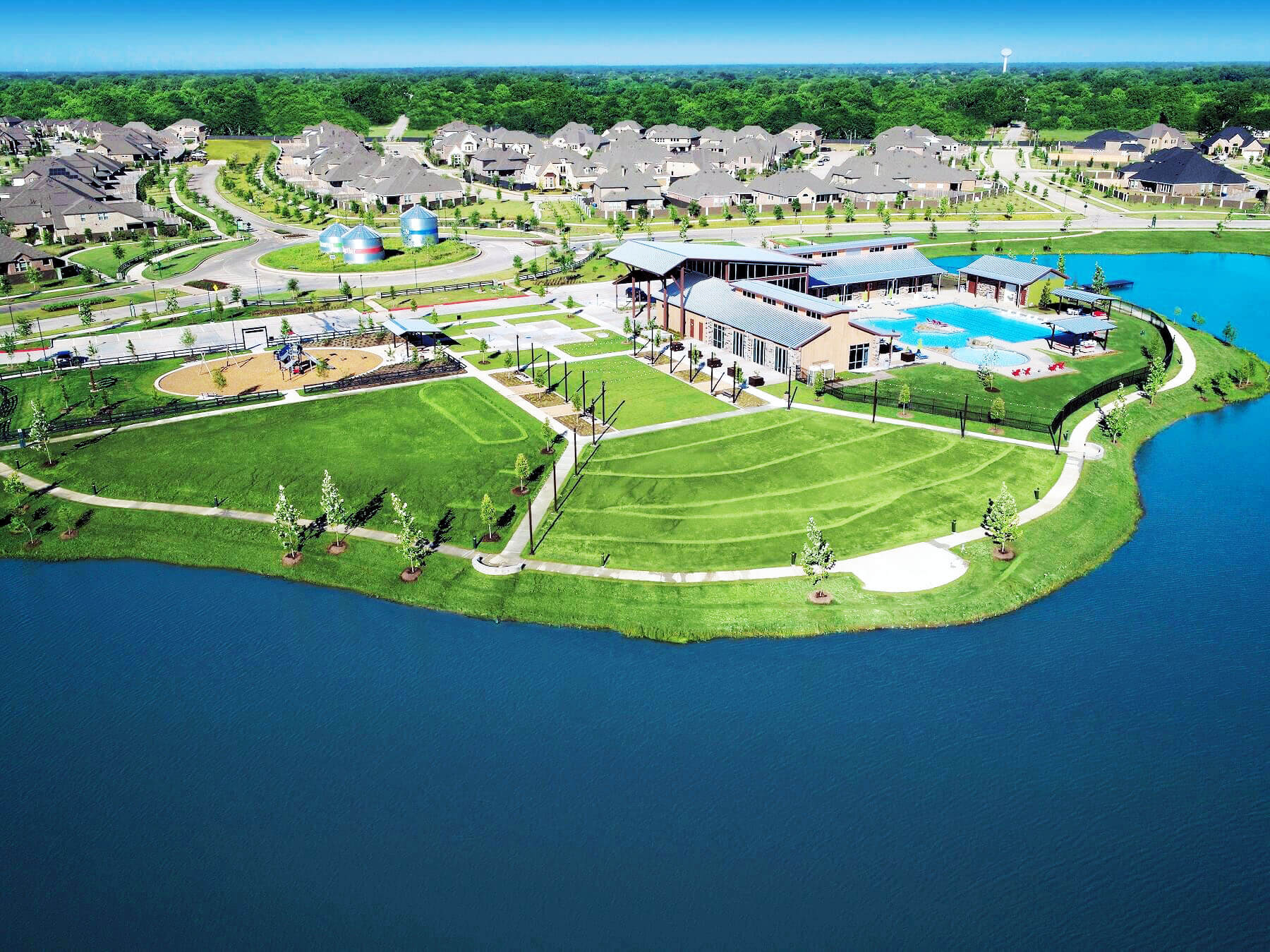
IN THE INDUSTRY
Texas Miracle Requires Attainable Housing
Read More
IN THE INDUSTRY
MUD Park Bonds
Read More
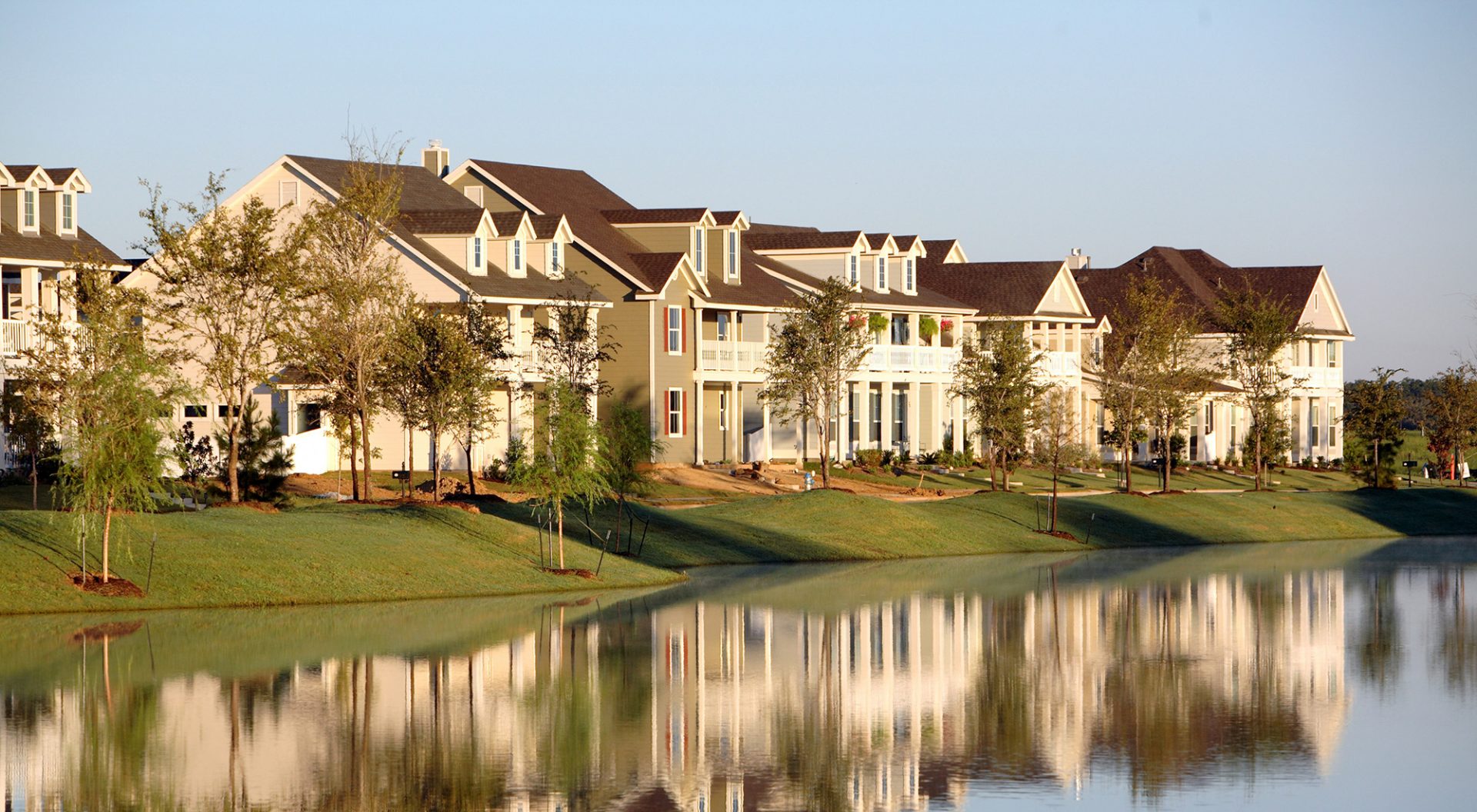
IN THE INDUSTRY
Everything Starts With Rooftops
Read More